US Stock Indices Bounce Back After Tariff-Driven Sell-Off Shakes Global Sentiment
2025-04-08 17:16:55


US Stock Indices Bounce Back After Tariff-Driven Sell-Off Shakes Global Sentiment
Overview
U.S. equity markets faced sharp declines this past week as global investors reacted to sweeping new tariffs announced by President Donald Trump. On April 2, 2025, the administration imposed a universal 10% tariff on all imports, with steeper rates targeting select countries. The decision aims to address long-standing trade imbalances but has quickly sparked financial turbulence and retaliatory responses.
- Tariffs Trigger Market Shock – Trump’s 10% import tariff rattled markets and triggered sell-offs.
- S&P 500 dropped 4.9%, wiping out $2.5 trillion.
- Dow fell 2,200+ points after China’s retaliation.
- Inflation Pressures Mount – Import costs are fueling core inflation concerns.
- Core inflation (MoM) forecasted to rise in April.
- Businesses begin passing higher costs to consumers.
- PPI Data in Focus – March PPI may confirm early supply-side cost pressures.
- Expected +0.2% increase signals rising production expenses.
- Could shift expectations on Fed’s rate path.
- Fed Holds Firm – Powell stays cautious despite political pressure.
- Emergency meeting held to assess economic impact.
- No immediate rate cuts planned without clearer data.
- Market Bounce Offers Temporary Relief – Despite pressure from top tech stocks, major indices are showing early signs of recovery.
- The Dow Jones closed near Monday’s candle after three consecutive days of downside, signaling potential exhaustion from sellers.
- The Nasdaq rebounded during the New York session and is now approaching key liquidity zones for a possible bullish continuation.
- The S&P 500 is drawing into the 5252.76 – 5372.79 FVG level, where a breakout could fuel further upside if buyers remain in control.
Market Fallout: Trillions Wiped as Tariff Shock Ripples Across Wall Street
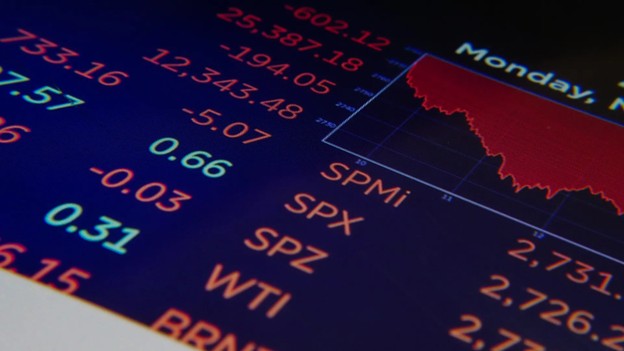
- April 3: The S&P 500 plummeted 4.9%, erasing approximately $2.5 trillion in market value—its worst single-day drop since the COVID-19 selloff in 2020.
- April 4: The Dow Jones Industrial Average fell more than 2,200 points following China's announcement of a 34% retaliatory tariff on U.S. goods, signaling a new escalation in the trade war.
Top Finance Leaders Warn of Recession Risks

Jamie Dimon, CEO of JPMorgan Chase: Raised concerns that prolonged tariff enforcement could reignite inflation and suppress economic growth, emphasizing the need for policy clarity and resolution.
Jim Cramer: Warned that these trade moves could set the stage for a market collapse comparable to Black Monday 1987, should investors lose confidence in the global economic outlook.
Bill Ackman, Hedge Fund Manager: Described the current climate as a potential “economic nuclear winter” and urged a 90-day pause on tariffs to avoid long-term damage to markets and consumers.
Tariffs Spark Inflation Anxiety: Stagflation Fears on the Rise

Economists are sounding the alarm on stagflation, the toxic mix of rising prices and slowing growth.
- Yale Budget Lab forecasts a 2.3% inflation spike in 2025, costing the average household an extra $3,800 annually.
- Citi’s research team, led by Lucy Baldwin, expects inflation to climb to 4% this year, citing the direct cost impact of tariffs on goods and materials.
Core Inflation Rate MoM: Forecasted to Rise

Core inflation (MoM) is forecasted to rise, driven in part by the new 10% tariffs recently imposed by the Trump administration. As import costs climb, businesses are beginning to pass higher prices onto consumers, fueling underlying inflation.
This trend complicates the Federal Reserve’s path forward, as sticky inflation—now worsened by trade policy—could delay any rate cuts. Markets may face renewed volatility as tariffs amplify price pressures across sectors.
Federal Reserve Response: Holding Firm as Risks Rise

Federal Reserve Chair Jerome Powell acknowledged the larger-than-expected economic shock from the tariffs, stating they are likely to increase inflation and suppress growth. He emphasized the Fed’s goal of preventing temporary price hikes from becoming long-term inflation trends.
No Immediate Rate Cuts Despite Trump’s Pressure: Despite public pressure from President Trump for a rate cut, Powell reaffirmed the Fed's data-driven approach, stating the central bank will not move prematurely until more economic clarity is achieved.
Fed Calls Emergency Closed-Door Meeting: The Federal Reserve has convened a closed emergency session to assess the economic risks stemming from the trade policy shift. This internal review signals growing concern at the highest levels of monetary policy.
Producer Price Index (PPI) in Focus: Inflation Gauge Expected to Rise

Investors are closely watching the upcoming Producer Price Index (PPI) report for March 2025, scheduled for release on April 11. As a key measure of wholesale inflation, the PPI provides early insights into cost pressures facing manufacturers and suppliers, often foreshadowing future consumer price increases.
- Analysts anticipate a +0.2% month-over-month increase, potentially confirming early signs of tariff-driven cost pressures across production and supply chains.
In short, the March PPI report won’t just be a data point—it’s a barometer for how deeply trade policy is starting to affect the supply side of the economy.
Trump Defends Strategy: “Sometimes You Have to Take Medicine”

President Trump has doubled down on his decision, stating:
“I don’t want stock prices to fall, but sometimes you have to take medicine to fix something.”
His unwavering stance continues to divide economists and policymakers. Critics argue that prolonged trade tensions may trigger a recession, while supporters say the bold approach is necessary for long-term trade reform.
Wall Street Bounces Back Amid Volatility
Dow
Daily

After three consecutive days of heavy downside following the global rollout of tariffs, the Dow finally caught a breather, closing near Monday’s candle close.
Price action may now be drawing liquidity into the 39,205.57 – 40,387.70 Fair Value Gap (FVG) zone, where we could anticipate a potential bearish reaction if supply steps in.
4-Hour

Potential Scenarios
- Bullish: A breakout of the 39,205.57 – 40,387.70 could trigger a further rebound for the Dow with targets at 40477.61 - 41605.40 level.
- Bearish: 39,205.57 – 40,387.70 acts as a resistance level and a break of a new low created at that level could potentially be a catalyst for downside.
NASDAQ

Since April 7, 2025, the top seven Nasdaq-listed companies—Apple (AAPL), Microsoft (MSFT), Amazon (AMZN), Alphabet (GOOGL), Meta Platforms (META), Tesla (TSLA), and NVIDIA (NVDA)—have experienced significant market volatility, primarily due to the recent imposition of global tariffs by the U.S. administration.
Apple (AAPL): The stock declined by 4.8% on April 7, nearing a one-year low. Analyst Dan Ives from Wedbush reduced Apple's price target from $325 to $250, citing the tariffs as a "complete disaster" for the company, given its reliance on Chinese assembly lines.
Tesla (TSLA): Shares fell by 7% on April 7. Ives also slashed Tesla's price target from $550 to $315, expressing concerns over the company's challenges in China and potential brand issues linked to CEO Elon Musk's political affiliations.
NVIDIA (NVDA): The stock experienced a 7.1% decline on April 7, reflecting broader concerns about the impact of tariffs on the semiconductor industry.
Microsoft (MSFT): The company faced a 10.1% decline in its stock price as of April 7, influenced by the overall market downturn and trade tensions.
Amazon (AMZN): The e-commerce giant's stock decreased by 13.3% as of April 7, amid concerns about increased costs due to tariffs and potential impacts on consumer spending.
Alphabet (GOOGL): Shares declined by 18.3% as of April 7, with the company facing additional pressures from ongoing antitrust actions by the Department of Justice.
Meta Platforms (META): Among the "Magnificent Seven," Meta has been the most resilient, with its stock price remaining relatively flat since the beginning of 2025.
These developments underscore the broader market's sensitivity to international trade policies and the potential for significant impacts on major technology companies.
Despite drawback from the 7, NASDAQ bounced and is currently rebounding to the upside.
Daily

At the start of the week, the Nasdaq opened with a sharp decline but managed to recover during the New York session.
4-Hour

Potential Scenarios
- Bullish: A potential draw on the previous day’s high could be a move that we could look at with NASDAQ, and targeting levels at 18218.31 - 18443.75 & 18777.09 - 18995.25
- Bearish: A reaction at the 18218.31 - 18443.75 level with a technical confirmation of a market structure shift could create further downside on NASDAQ.
S&P
Daily

We are looking for a draw on liquidity at 5252.76 - 5372.79 level.
4-Hour

Potential Scenarios
- Bullish: Break of previous day’s high; break of the 5252.76 - 5372.79 FVG level.
- Bearish: Previous day’s high & 5252.76 - 5372.79 FVG level acts as resistance. Once there’s an MSS, we could look for shorts.
This content may have been written by a third party. ACY makes no representation or warranty and assumes no liability as to the accuracy or completeness of the information provided, nor any loss arising from any investment based on a recommendation, forecast or other information supplies by any third-party. This content is information only, and does not constitute financial, investment or other advice on which you can rely.
延伸閱讀