Impact of RBA Meeting on AUD/USD: Why is the Big Bank Making It Harder to Spend?
2026-04-01 06:41:33


Why is the Big Bank Pulling the Money Lever to Slow Down Prices?
The big bank uses a money lever, or we call it as interest rate to keep the cost of things like food and toys from rising too fast.
By pulling this lever, they make it harder to borrow money so that people spend less, and prices stay steady. They are doing this now because a war far away has made oil expensive, making it harder for trucks to deliver goods. The bank’s leaders were split on this decision, with five voting to pull the lever and four wanting to wait. In May, they will meet again to decide if they need to slow things down even more to keep the economy healthy.
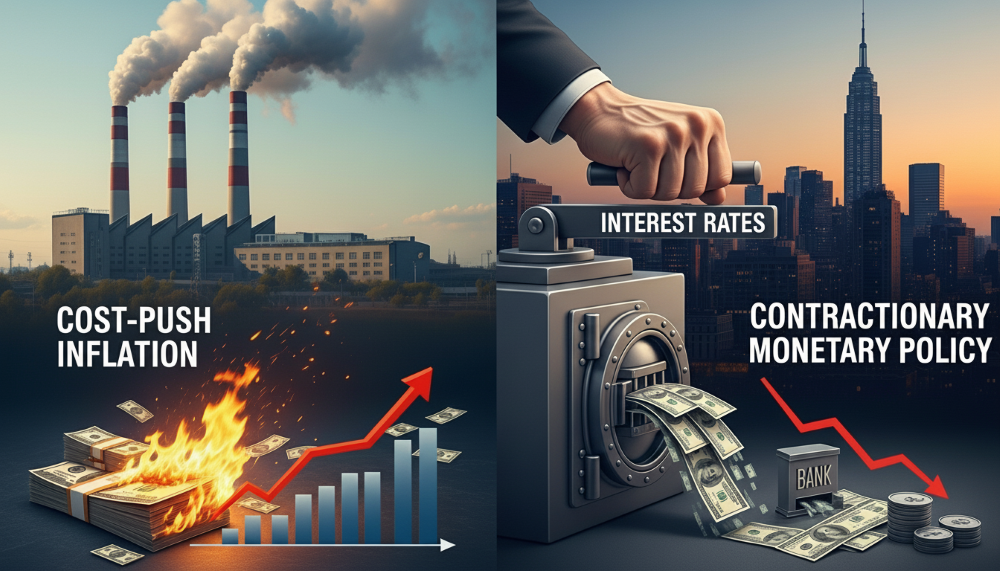
In Macroeconomics, we call this example as a Cost-Push Inflation and the bank is using a money tool called Contractionary Monetary Policy to fix it.
What is Cost Push Inflation?
Cost-push inflation occurs when the expense of making or transporting goods increases, such as when expensive fuel makes it pricier to run delivery trucks. Because a war far away is driving oil prices toward $100, stores are forced to charge more for snacks and toys to cover their own rising bills. To fight this, the Big Bank is raising interest rates to act as a brake, slowing down how fast these pushed up prices can rise for families.
What is Contractionary Monetary Policy?
A contractionary policy is when the Big Bank pulls the money lever to act like a brake for the whole economy. By raising interest rates, they make it more expensive to borrow money, which encourages people to save more and spend less at the store. This helps slow down the economy machine so that prices for things like food and toys stop rising quite so fast.
AUD/USD CHART
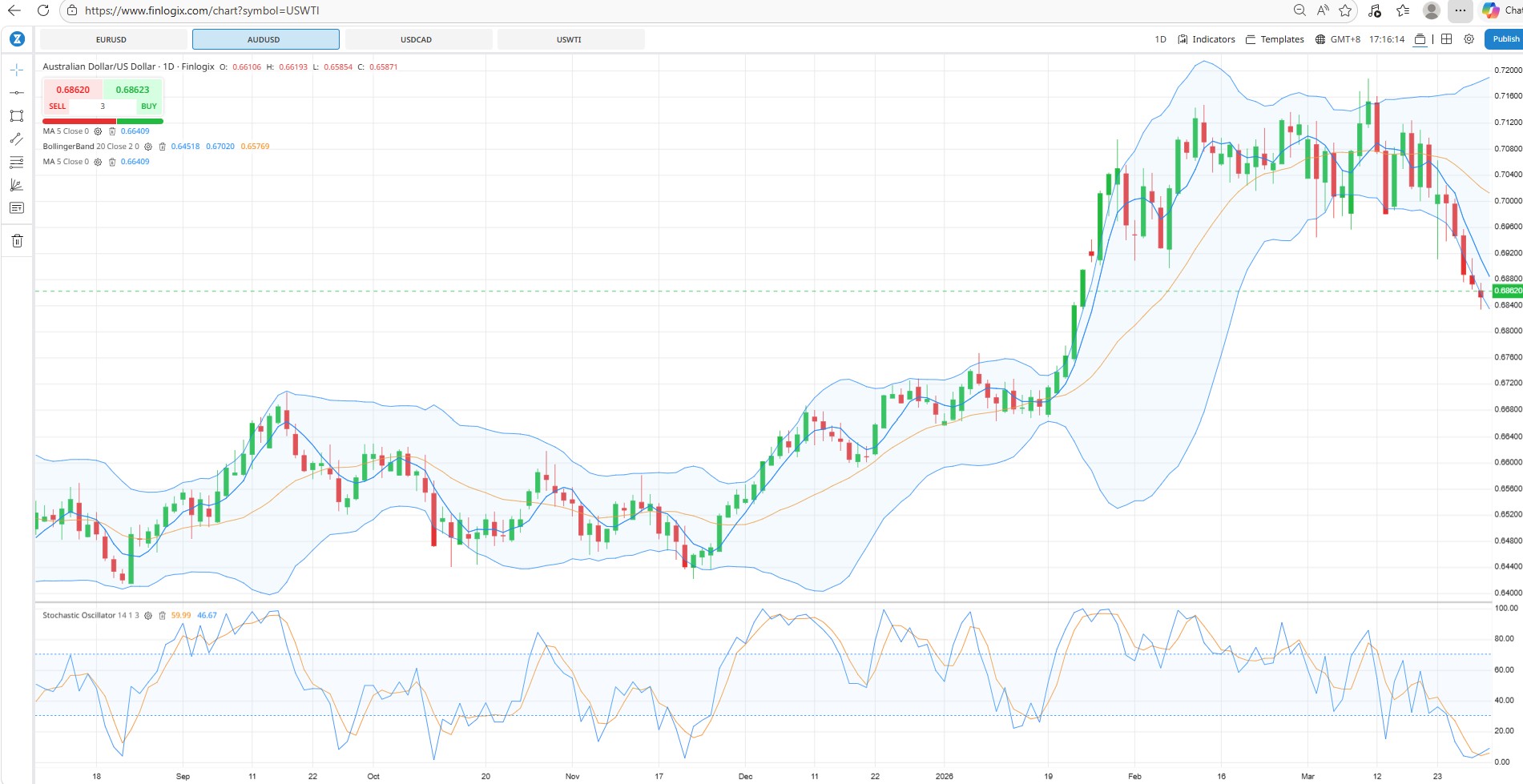
Base from the chart showed a sudden uptrend as the Big Bank in Australia showed it is very serious about fighting high prices, which made more people want to trade for the Australian dollar. By revealing that many leaders voted to keep interest rates high, the value of Australia's money started to climb back up against the US dollar. Even though prices for things like oil are still rising, this move helps the Australian dollar stay strong as traders wait for the next big decision in May.
Think of this chart as a vibrant map for a mountain climber named Aussie and here’s how to interpret it.
The Footprints
The bars as Aussie's footprints on the mountain.
- Green footprints mean Aussie is feeling strong and zooming toward the top.
- Red footprints mean he’s having a slippery day and sliding back down.
- Right now, he’s left a trail of red footprints, so he is currently sliding a little bit.
The Safe Tunnel
The blue lines that look like a stretchy tunnel is Aussie's Safe Zone.
- As long as he stays inside those lines, he is doing great.
- He is currently touching the floor of the tunnel, which means he is looking for a sturdy rock ledge to stand on so he doesn't fall any further.
The Battery Meter
The wavy lines at the very bottom is Aussie's Battery Meter.
- When the lines are at the top, his battery is full and he’s moving fast.
- When they are at the bottom, it means he is recharging. He’s taking a nap so he can wake up with enough energy to jump back up.
- The Steps. Green steps mean Aussie is climbing up, and red steps mean he is sliding down. Right now, he is taking a few red steps down the hill.
- The Guardrails. The blue lines are like soft walls that keep him safe. He is touching the bottom wall right now to find a steady place to stand.
- The Nap. The line at the bottom shows his energy. He is taking a quick nap at 0.6800 to recharge so he can climb back up to the 0.7000 peak later.
AUDUSD vs EURUSD
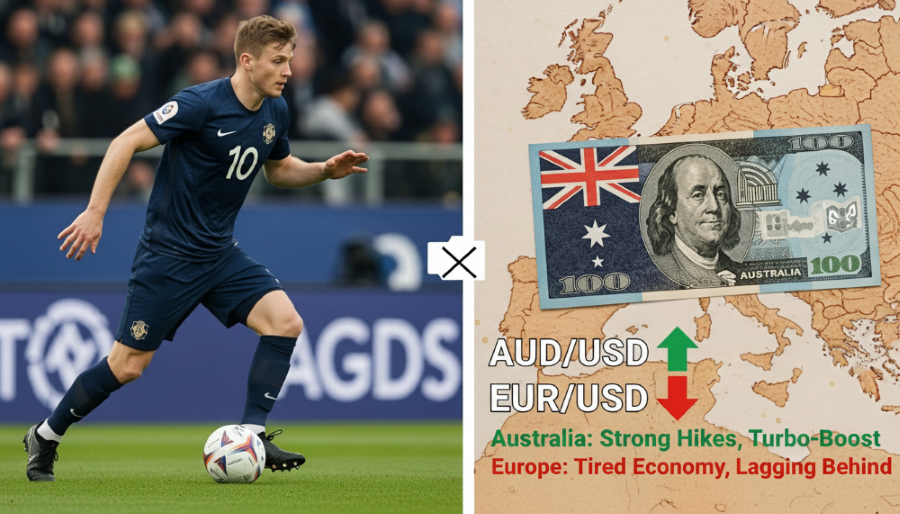
Trading the Australian dollar (AUD/USD) right now is like picking a stronger athlete compared to the European euro (EUR/USD). While both regions are dealing with high oil prices, Australia’s Big Bank is being much tougher by raising interest rates, which acts like a turbo-boost for their currency's value. In contrast, Europe’s economy is feeling more tired and sluggish, making the Australian dollar a more exciting choice for traders who want to follow the stronger team.
AUDUSD vs GOLD

The Big Bank in Australia is being very tough on high prices, which makes the Australian dollar act like a special savings account that pays you extra money just for holding it. In contrast, gold is like a security blanket that just sits there; it might be pretty, but it does not give you any bonus money for keeping it in your pocket. Because the bank is giving the Australian dollar a pay raise through higher interest rates, many people think it is more exciting to own than gold right now.
AUDUSD vs USDCAD
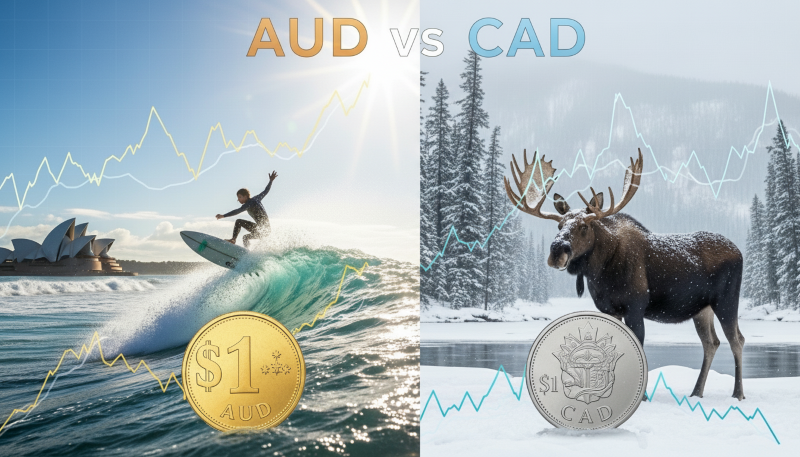
Both Australia and Canada benefit from expensive oil, but Australia’s Big Bank is being much tougher by keeping interest rates high at 4.10% to fight rising costs. Canada’s bank is staying more relaxed with a much lower rate of 2.25%, which means their money does not get the same turbo-boost that the Australian dollar enjoys. Because the Australian dollar wins from both high oil prices and higher interest, it is like a stronger athlete that traders would rather pick for a race.
AUDUSD vs BITCOIN

While both can be exciting, the Australian dollar is like a reliable athlete with a steady bonus, whereas Bitcoin is like a stormy ocean that is shaking because of scary news. Because the Big Bank in Australia is keeping interest rates high, people who hold Australian dollars get a pay raise that makes their money grow more predictably. Bitcoin does not pay any interest and is currently bouncing around because of a war far away, making it a much riskier choice for traders who want to stay safe on a solid ledge.
AUDUSD vs WTI

Choosing the Australian dollar instead of US oil right now is like picking a focused hiker over a crashing wave. While a war far away makes oil prices splash around unpredictably, Australia’s Big Bank is acting like a sturdy anchor by keeping interest rates high to keep their money's value steady. This means that while oil is a risky gamble, the Australian dollar is like an athlete with a clear map, making it a much smoother ride for people who want to stay on a safe ledge.
Conclusion & The ACY Edge
Australia’s Big Bank is acting like a strict coach by keeping interest rates high, giving our climber, Aussie, a powerful pay raises those other currencies just do not have. While things like oil and Bitcoin are bouncing around like a stormy ocean, the Australian dollar is staying strong on a solid ledge because it has a sturdy anchor protecting its value. With the next big meeting in May, these tough rules make the Australian dollar the strongest athlete for anyone who wants their money to stay safe and grow.
Disclaimer: This content may have been written by a third party. ACY makes no representation or warranty and assumes no liability as to the accuracy or completeness of the information provided, nor any loss arising from any investment based on a recommendation, forecast or other information supplies by any third-party. This content is information only, and does not constitute financial, investment or other advice on which you can rely.
Try These Next